
 Madhya Pradesh
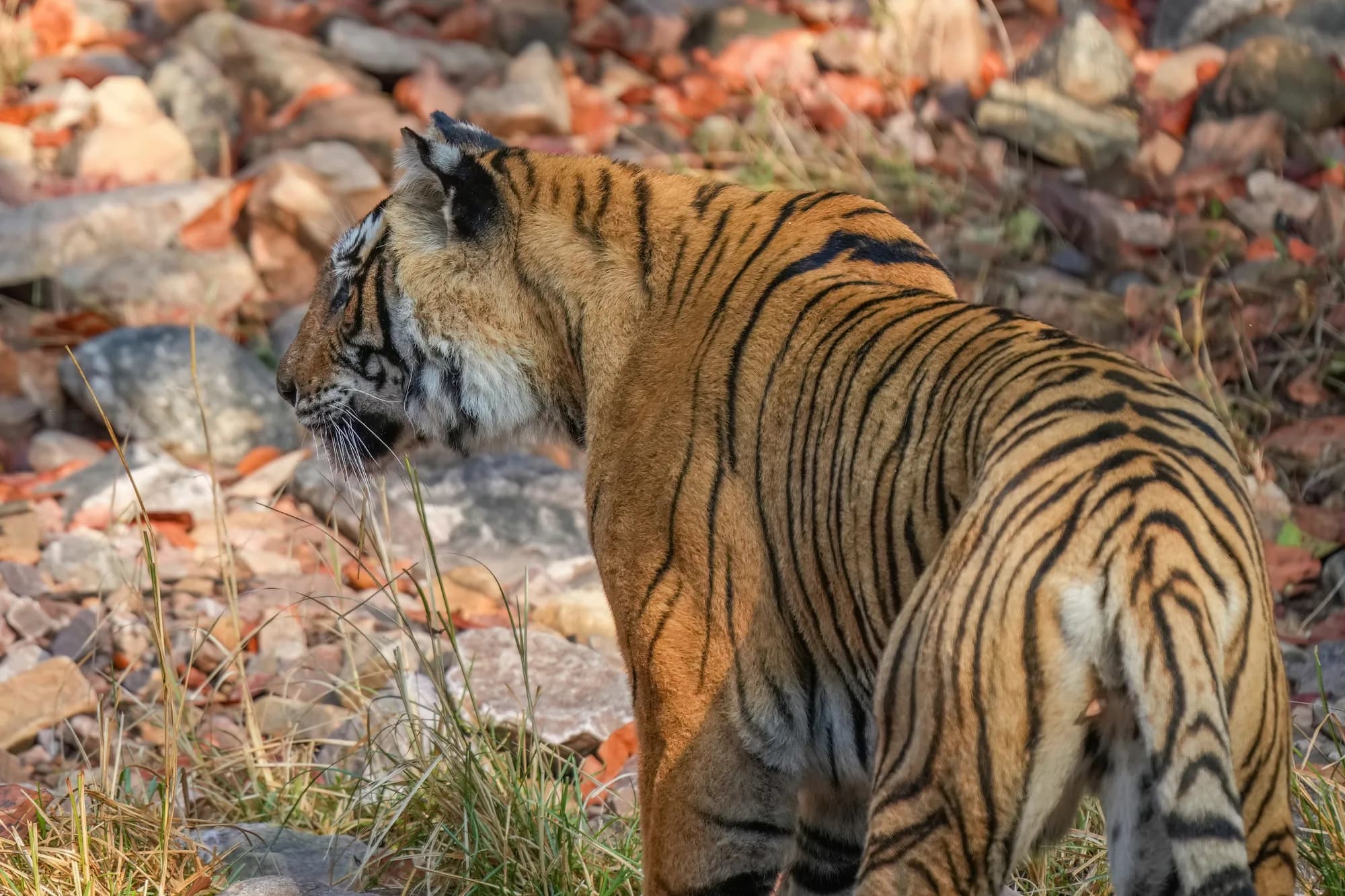
Bandhavgarh
Tigers, at the best odds in the country
- core jeep, per vehicle per round
- ₹4,360
- Best months
- March–June
12 countries · 226 parks · 134 sourced fees
Permits, zones and seasons — sourced and dated.
Where we work
226 parks, and 134 of them with a fee we can put a source and a date against. The gap between those two numbers is the work. The order below is how many of those fees each country accounts for — not how famous it is, and not how good its ratio looks.
39 of 110 carry a published fee.
Every one carries a published fee, all of it from SANParks.
Every one carries a published fee, all of it from Kenya Wildlife Service.
Every one carries a published fee, all of it from Tanzania National Parks.
Every one carries a published fee, all of it from the Ministry of Environment, Forestry and Tourism.
Every one carries a published fee, all of it from the Uganda Wildlife Authority.
6 of the 12 are complete, which means every park in them carries a fee from a document we read on a stated day. The rest are somewhere between that and nothing, and each page says which.
All 12 countriesWhy we built this
It is set by whichever body runs the park, published in a document, and paid at a gate. There is no reason it should be hard to find.
In practice it is. Fees sit inside booking logins, or in a PDF linked from a page that no longer loads, or in a gazette that gives a base rate and a coefficient and never says which one your park is. So most people book through an operator who quotes one bundled number, and never learn which part of it was the permit.
We are not against operators — you will need one, and we will introduce you to a good one. What we are against is not being able to check. A price you cannot break down is a price you cannot judge.
So we started reading the source documents ourselves, one park at a time, and publishing what we found with the page it came from and the date we read it. Where the sources contradict each other, we say so instead of picking the friendlier number.
This site is new. You will not find testimonials or star ratings here, because we have not earned any yet and inventing them would make a liar of everything else on the page. What we can show you is the working.
Start somewhere
Not the ones we know best — the ones most people are choosing between. Pick a country and start there.
Madhya PradeshTigers, at the best odds in the country
 Assam
Rhino, and the easiest large-mammal watching in India
 Maharashtra
Daylight tigers, dhole packs, and the world's best rusty-spotted cat
 Gujarat
Asiatic lions, and nothing else has them
Barasingha, and meadows that reward a longer stay
 Rajasthan
Tigers against ruins, and the country's best mugger watching
How we check
This is the unglamorous part, and the only part that makes the rest of the site worth anything.
01
Find the department's own page
Not an operator, not an aggregator, not a lodge. Their numbers are marketing, and marketing is what we are trying to get behind.
02
Check the domain is still who it says
Government sites lapse. We confirm the address still belongs to the department before anything from it reaches a page.
03
Read the figure and record where it came from
The URL and the date we read it, stored with the number. That is what lets the page tell you how old its own information is.
04
Re-read it every ninety days
Fees are revised without notice. A page whose figure has gone stale says so on its face rather than quietly staying wrong.
Four real examples from the parks we have worked through. We are publishing them because they explain why parts of this site say “not yet verified” instead of giving you a number.
Two official-looking domains have lapsed and now serve gambling sites
One of them is still linked from the working government portal's own notice PDFs. We keep a list of addresses that must never be linked.
Nameri's official FAQ answers a question about Manas
Copy-pasted content on an official department page, still live. Being official does not make a page correct — and the same week, a national parks authority served us no fee document at all.
Nagarahole's booking portal is headed “Corbett Tiger Reserve, Ramnagar, Uttarakhand”
An unreplaced template artefact, about fifteen hundred kilometres out.
Two official sources for Manas disagree, and neither says which wins
The site's own FAQ table against a 2021 order. So we publish neither, and say why.
Money
The park fee is almost never the answer. What you actually pay is three or four separate charges quoted as one, and which of them the authority fixes changes by country. Here is what moves between a lean trip and an expensive one, everywhere.
Where the numbers are
Where a figure is not yet verified the page says so instead of filling the gap. Entry charges are set by the authority that runs the park — a state forest department in India, SANParks, Kenya Wildlife Service — and we publish them only from that body’s own document, with the date we read it. A figure lifted from a blog is a figure that was true two seasons ago.
The one thing worth knowing at any budget
Drives move your odds. Rooms do not. Six drives from a modest camp will beat three from an expensive one, every time, and the extra drives are the cheapest line on the whole quote — in Madhya Pradesh, in the Luangwa and in the Mara alike. If the budget has to give somewhere, give on the room.
The full breakdownBefore you book
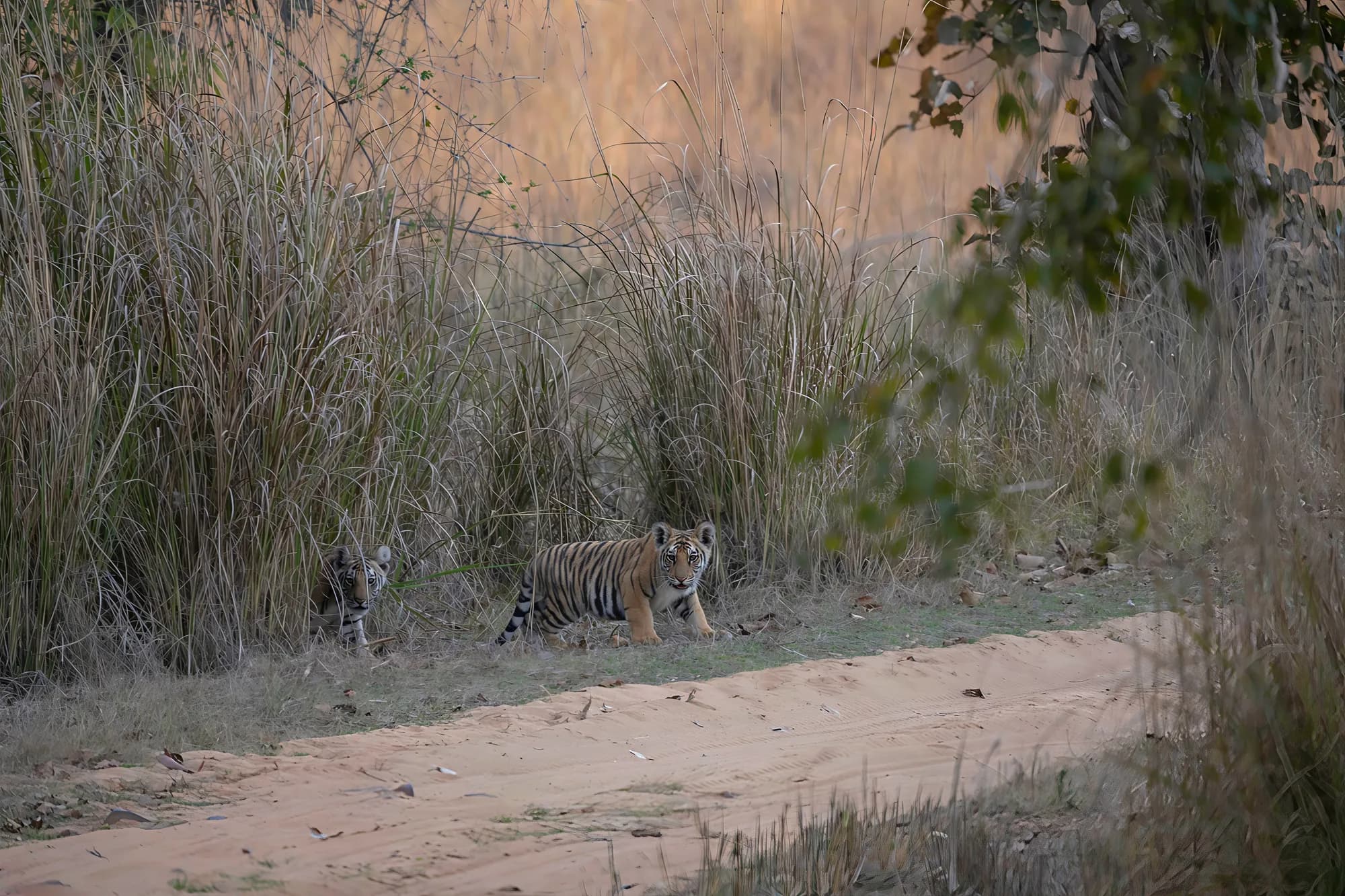
Sighting odds, permit difficulty and what each one costs you in travel days.
How a permit actually works, what a shift is, and why the jeep matters more than the lodge.
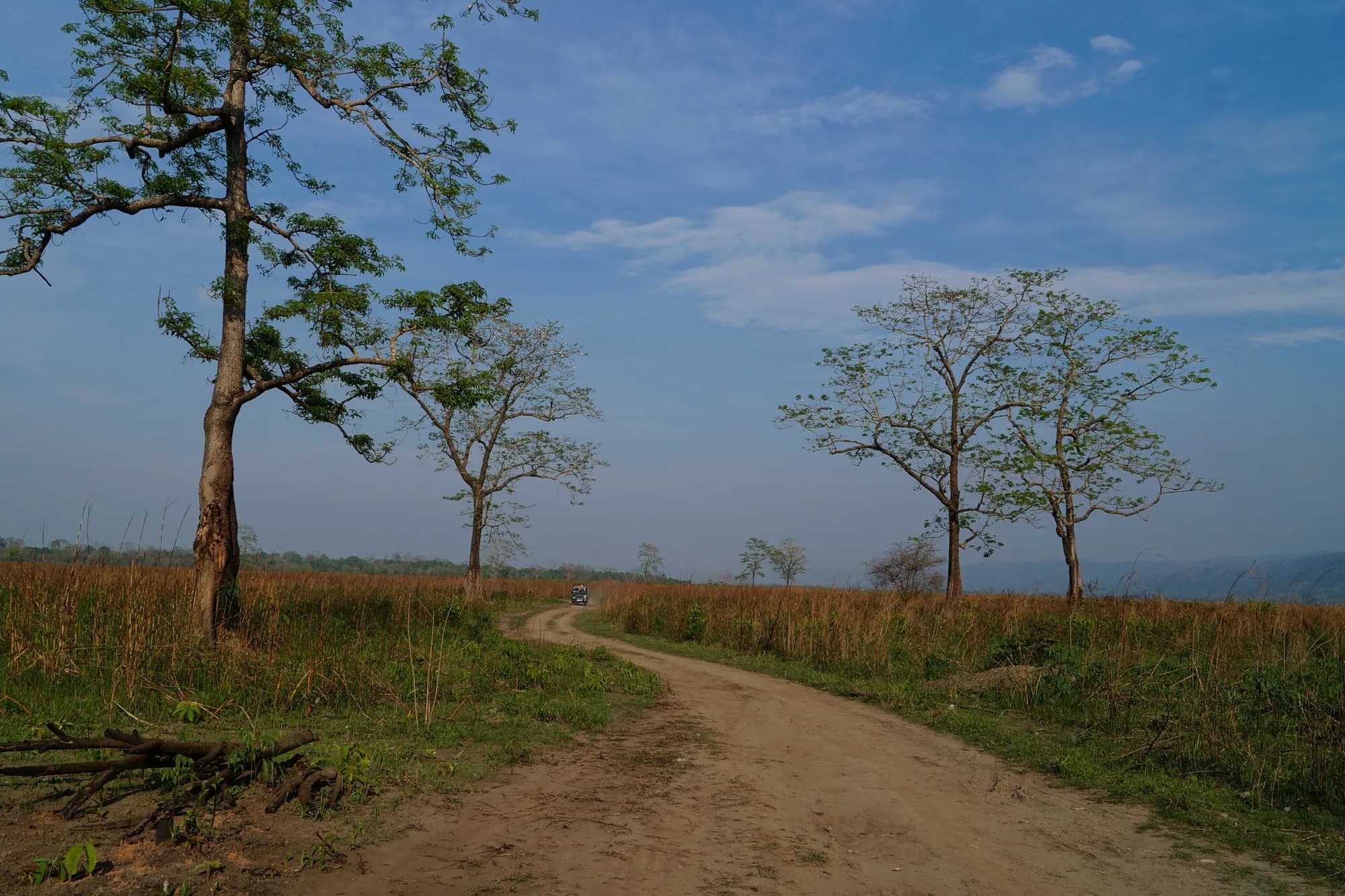
 Debabrata Phukon · CC BY-SA 4.0
Twelve months across every park we cover, including the ones worth avoiding.
Permits, vehicle, guide, stay and transfers — the full number, not the headline one.
Questions
The nine that come up most, answered the way we would answer a friend. Where an answer needs a number we have not verified, it says so rather than guessing.
If you want big cats and open country with the fewest unknowns, Kruger in South Africa or the Maasai Mara in Kenya. If you want a tiger, Bandhavgarh in India. If you want gorillas, Bwindi in Uganda or Volcanoes in Rwanda, and nothing else will substitute. The honest short answer is that the animal decides the country, not the other way round.
Almost everywhere, the dry season — water is scarce, the vegetation has thinned and animals concentrate on what is left. What differs is when that is. East and southern Africa run roughly June to October. India runs March to June and closes most central reserves through the monsoon. Sri Lanka's dry season is the opposite of its own north's. Each park page carries its own months rather than a continental rule.
Three nights in one park, which gives five or six drives, is where the odds start working for you. Two is workable. One night is a long way to travel for a single drive and is the commonest way to spend a lot of money and see a forest. Adding a second park costs a travel day; adding a second country usually costs two.
The park fee is almost never the answer. In India it is four charges quoted as one — permit, vehicle, a compulsory guide and your stay. In Botswana the park fee is a rounding error against the concession. In Uganda the gorilla permit costs many times the park it is in. We publish the part the authority sets and say plainly what it does not cover. The working is on the cost calculator, and every figure in it is published only once read at source and dated.
Where a permit is rationed, yes, and earlier than feels reasonable. Gorilla permits in Uganda and Rwanda are capped at eight people per group per day and sell months ahead. Indian core-zone permits open a fixed window ahead and can clear in minutes. Most African park entry is paid at the gate and needs no booking at all — what needs booking is the bed.
Because the authority has not published one where we can read it, and we will not print a number we cannot source. 92 of our 226 pages are in that state today. Tanzania is the worst case: its parks authority serves no fee document at all, so every figure quoted online for the Serengeti traces back to a tour operator repeating another one. The count moves as the research lands — see where it stands by country.
In India it matters more than which park you chose: every large reserve is split into zones with their own gate, vehicle quota and resident animals, and your permit is tied to one. Elsewhere the equivalent is the sector or the concession — Kruger's south against its north, the Serengeti's Seronera against the Western Corridor. Two people in the same park in the same week can describe different places. Zone profiles sit on each park page.
Kenya and Tanzania, yes — the same ecosystem, and the border crossing is routine. Uganda and Rwanda, yes, and often cheaper than either alone. South Africa with Botswana or Zimbabwe, yes. India with anything else, no: it is a trip of its own, and the flights make a combined itinerary a fortnight before it is anything else.
No. The site is free, and we are paid by the operator who delivers your trip rather than by you. Nothing here is ranked by who pays us, we link to the authority's own booking page rather than a reseller, and we say plainly when a park is not worth the journey.
Free planning guide
Every park we cover, every month, with closures, sighting patterns and what the heat is genuinely like. One email, no phone number.
The guide and the occasional census update. Unsubscribe in one click.